
Textbooks are designed to be thorough, but that depth often comes at the cost of time and focus. For many students, keeping up with long chapters while juggling exams, assignments, and deadlines quickly becomes overwhelming. That’s why summaries, like those found in CliffsNotes or SparkNotes, have long been part of how students study.
However, traditional summary guides often fail to keep pace with updated editions, new topics, or individual learning needs. As a result, more and more students are turning to AI textbook summarizers. Instead of relying on fixed notes, AI tools can generate up-to-date summaries directly from the textbook itself, focusing on key concepts and exam-relevant material. In this way, summarizing textbooks becomes less about shortcuts and more about studying with intention.
How to Summarize Textbook Chapters with AI
The next day is your final examination, and there are hundreds of pages left in your textbook that you have not read. Rather than scrolling forever, you input the PDF into Mapify and receive concise summaries instantly. Mapify transforms dense textbook content into structured insights that are easier to understand and remember. By uploading a PDF, students can view key ideas organized into clear summaries and visual mind maps.
Moreover, this approach saves time while improving comprehension across complex academic subjects. As a modern textbook summarizer, Mapify supports “Chat PDF,” allowing students to interact directly with textbook content inside the same workspace. Instead of rereading entire chapters, users can ask questions and receive focused explanations side-by-side. Mapify also supports summarizing research papers, class notes, presentation slides, and deep research with cited reports.
Instantly turn your content into mind maps with AI
Get Started NowSteps to summarize Textbook Chapters with Mapify AI
Step 1: Upload your textbook to Mapify AI
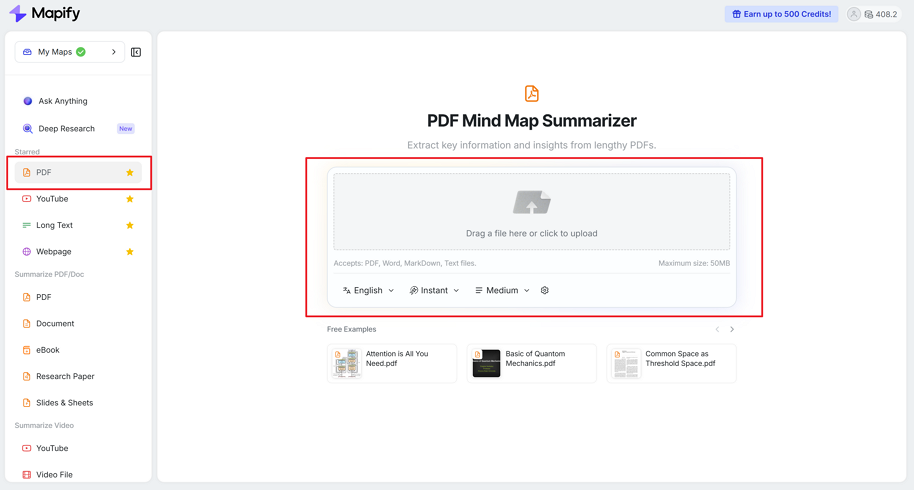
Log in to your Mapify account or move to the PDF summarizer page to launch the product interface. You can upload your textbook as a PDF file. Click on the PDF option on the left panel, and upload by dragging & dropping or clicking.
Step 2: Generate and refine the AI summary
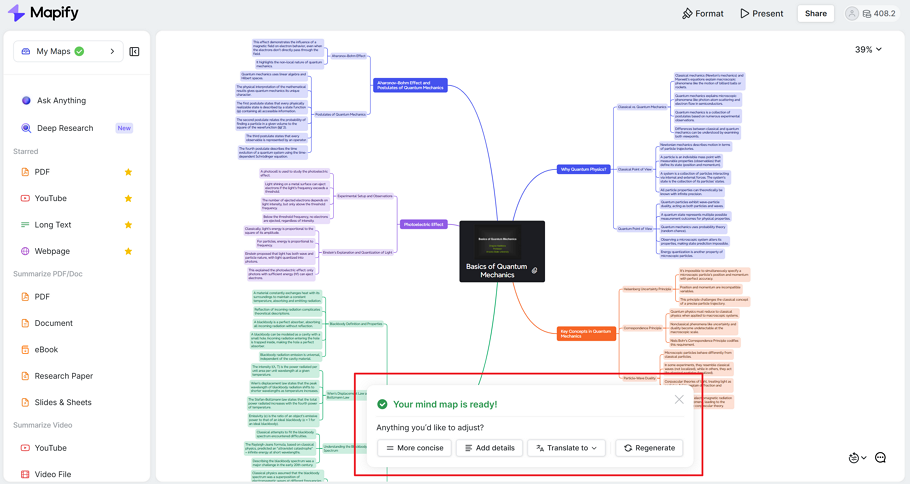
Mapify automatically generates a comprehensive mind map that summarizes the textbook. Next, use the refinement options to make the summary more concise, add details, translate content, or regenerate results. You can chat with the AI to specify your needs.
Step 3: Export textbook summaries as a mind map
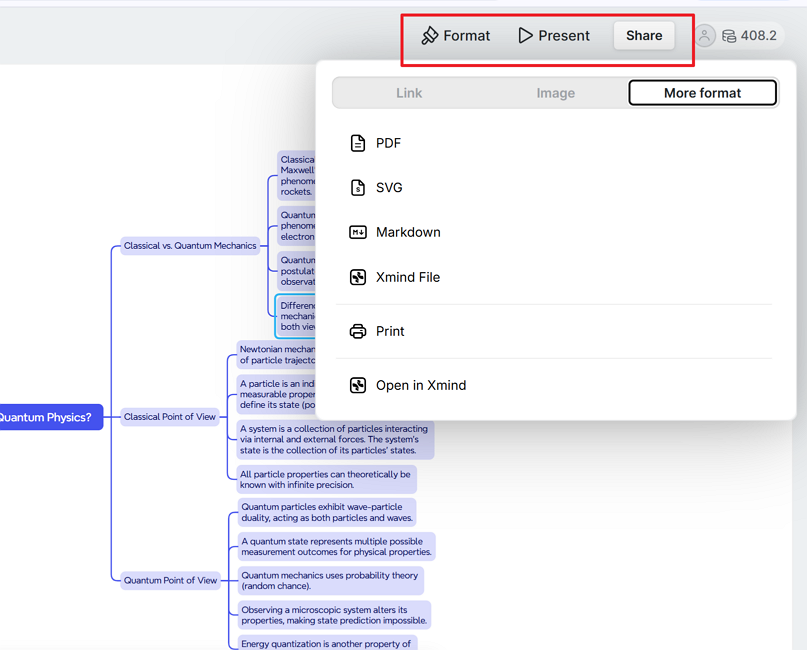
Once finalized, click the “Share” button to export or share the summarized mind map with classmates or save it for revision. You can download it as a PDF, image, markdown, or Xmind file.
Why Students Use Textbook Summaries
Time Savings
Students can use the saved time before exams to avoid spending time reading long chapters and re-explaining the same information. This approach reduces overload while improving focus on tested material during preparation periods.
Concept Focus
Summaries highlight essential ideas, allowing students to understand concepts without reading entire chapters. This keeps learning targeted and prevents distraction from excessive details or secondary explanations.
Revision Support
Short summaries assist in speeding up the revision by arranging information into easily manageable units. They also make it easier to take notes, and this enables students to revise effectively before tests.
Academic Breadth
Textbook summaries are used across the disciplines of science, medicine, business, and humanities courses across the world. This flexibility makes them useful regardless of subject complexity or academic specialization level.
Update Accuracy
AI-based summaries remain current, reflecting updated editions, terminology, and evolving academic standards worldwide. This avoids reliance on outdated guides that may miss new topics or revisions.
Flexible Learning
Students can create summaries within any required length, depth, or of certain chapters in a short amount of time. The flexibility promotes various learning styles, schedules, and personal academic objectives among learners.
Instantly turn your content into mind maps with AI
Get Started NowTextbook Summarizer FAQ
1. What is a textbook summarizer?
A textbook summarizer is an AI-powered tool that helps students condense long textbooks or chapters into shorter, clearer summaries. It extracts key concepts, definitions, and main ideas to make studying faster and easier.
2. Can AI summarize textbook chapters accurately?
Yes, modern AI tools can summarize textbook chapters accurately, especially when the content is well-structured. They work best for identifying core concepts, section summaries, and exam-relevant points, though reviewing the output is always recommended.
3. How is a textbook summarizer different from Cliff Notes or SparkNotes?
Traditional services like Cliff Notes or SparkNotes provide fixed summaries for selected books only. A textbook summarizer can generate summaries for any textbook or chapter, including PDFs and digital materials, and allows users to customize length and focus.
4. Can I summarize only one chapter instead of the whole textbook?
Yes. Most AI textbook summarizers allow you to summarize individual chapters, sections, or selected pages, which is useful for targeted revision and exam preparation.
5. Are textbook summarizers useful for exam preparation?
Absolutely. Textbook summaries help students focus on key ideas, formulas, and definitions, making them especially useful for revision before exams or quizzes.
6. Can textbook summarizers handle PDF textbooks?
Most tools support PDF uploads, allowing users to summarize textbook chapters directly from PDF files without copying text manually.
7. Is using a textbook summarizer considered cheating?
Using a textbook summarizer is generally considered a study aid, similar to notes or summaries, as long as students use it for understanding and learning—not for submitting AI-generated content as original work.
8. Which subjects work best with textbook summarizers?
Textbook summarizers work well for subjects with structured content, such as biology, medicine, economics, business, psychology, and engineering. They are also helpful for the humanities and social sciences.
Conclusion
Managing heavy textbook reading is no longer just about endurance; it’s about efficiency. A good textbook summarizer helps students reduce long chapters into clear, focused insights, making study time more productive and less stressful. AI-based summaries offer a flexible alternative to traditional study guides by adapting to updated content and individual learning goals.
For students looking to simplify revision, summarizing textbook chapters with AI is a practical approach. Tools like Mapify allow learners to turn PDF textbooks into structured summaries and visual mind maps, making complex material easier to understand and review. Instead of spending hours rereading, students can focus on what matters most—understanding concepts and preparing with confidence.
Instantly turn your content into mind maps with AI
Get Started Now

.png)